How to Stay Anonymous on OnlyFans: The Ongoing Playbook
Staying anonymous on OnlyFans is an ongoing practice, not a one-time setup. The routines, DM rules, and monthly audits that keep your identity yours.
- anonymity
- onlyfans
- privacy
- opsec
Staying anonymous on OnlyFans comes down to running the account so that nothing public ever connects your creator identity to your real one: every file processed before it posts, every DM answered in persona, promo accounts that share zero signals with your personal life, and a monthly audit to catch drift. Setup makes you anonymous. Operations keep you that way. This guide covers the operations side, the routines that still hold at month twelve, long after the launch-week adrenaline is gone.
If you haven't launched yet, start with the anonymous account setup guide and complete the interactive 25-step privacy checklist to build and verify the foundation. This page assumes that work is done and answers the harder question: how do you keep an anonymous account anonymous while actively growing it?
Why anonymity decays over time
A new anonymous account is at its safest on day one. It has no content to reverse-image-search, no DM history to mine, no subscriber base with a curious minority, and no promo footprint to cross-reference. Every week of operation changes that.
Think of it as surface area. Each post is a new image someone can screenshot and search. Each DM thread is a growing transcript of small personal details. Each promo clip is another chance for a background object, a reflection, or a voice pattern to slip through. None of these is dangerous alone. The risk comes from accumulation: hundreds of files and thousands of messages, any two of which might combine into a lead.
Growth makes the same math worse. At fifty subscribers, the odds that anyone cares enough to investigate you are low. At a few thousand, you will have fans who feel entitled to know you, exes and acquaintances who might stumble across a viral clip, and the occasional person who treats unmasking creators as a hobby. Our breakdown of how creators get doxxed maps those attacker types in detail; the short version is that exposure risk scales with reach, and reach is the whole point of the account.
So the setup-then-forget model fails quietly. What works is treating anonymity like hygiene: small routines on a fixed cadence, built into how you produce, post, and talk. The rest of this guide is those routines.
The seam between your two identities
Every anonymous creator is managing two identities. There's the real you: legal name, face, address, personal accounts, the identity OnlyFans verified for payouts. And there's the persona: stage name, synthetic or hidden face, fictional backstory, creator accounts. Neither identity is fragile by itself. The thing you're protecting is the seam where they could touch.
Every leak in the history of creator doxxing is a seam failure. A photo posted on both identities. A phone number used for both. A voice that matches. A package addressed to a real name in the background of a shot. Once you see it this way, the daily question gets simpler: does this action create a new thread between the two identities, or keep them separate?
That framing also tells you where verification fits. OnlyFans knows who you are, and that's fine: identity verification, taxes, and payouts live on the platform side of the wall and are not shown to subscribers. Your defense effort belongs entirely on the public surface, the content and conversations anyone can see. Keep payout banking in an account nobody else reads statements from, verify honestly, and spend zero further worry there.
The publishing routine: every file, every time
Content is your biggest surface, so the core habit is a pipeline every file passes through before it leaves your device. Creators who stay anonymous for years don't reinvent this per post; they run the same boring sequence until it's muscle memory.
- Shoot with a clean set. Keep one dedicated corner or backdrop for creator content: no windows, no mail, no diplomas, no distinctive furniture visible from personal-account photos. A set you control beats a background you have to inspect every time.
- Apply the face policy. Whatever your face policy is (out of frame, physical mask, or reviewed face anonymization), apply it to every file in the batch, including the throwaway story clips. The exceptions are what get screenshot.
- Inspect and strip metadata. Run the exact final file through the browser-local EXIF metadata checker, create a separate cleaned copy when needed, and inspect that output again. Never depend on a destination to remove GPS, owner, device, date, or XMP fields for you.
- Do a two-minute detective pass. Zoom into reflections (mirrors, glasses, windows, phone screens), check for tattoos or birthmarks you've decided to hide, listen for identifying audio like sirens, trains, or a neighbor's name being called.
- Rename the files.
IMG_4407.HEICfrom your personal phone orkelsey_bedroom_v2.mp4both say more than they should. Neutral names, every time. - Post from the creator profile only. Separate browser profile or separate device, creator accounts logged in nowhere else. The wrong-account post is a classic seam failure and it happens to careful people at 1 a.m.
Written out, this looks like work. In practice, steps 2 through 6 take a few minutes per batch once they're habitual, and batching content weekly means you run the pipeline once a week rather than daily.
DM discipline: where anonymity erodes fastest
Content leaks are dramatic, but message leaks are more common, because DMs feel private and accumulate forever. A subscriber who has chatted with you for eight months holds a long transcript, and transcripts can be mined.
The failure mode is drift. Nobody tells a fan their real name. What they do is mention it's raining, complain about a shift at work, answer "what time zone are you in?", reference a local sports team, and go quiet on the same holiday every year. Each detail is harmless. Together, across months, they narrow a search from "somewhere in the world" to "a nurse in a specific metro area who works Tuesdays."
The fix is a persona sheet: a written document with your persona's fictional city, region, job, age, backstory, and a list of topics you never answer. Written, not remembered, because improvised answers contradict each other and contradictions make people curious. The rules that keep it working:
- Fixed fictional details, reused forever. Same city, same story, on every platform and in every DM. Consistency reads as truth and gives searchers a dead end instead of a thread.
- Hard no-answer categories. Real location beyond the fictional one, work schedule, family, neighborhood details, and anything about your day that ties to a searchable event. Deflect warmly, in character.
- Watch the parasocial pull. Your best-paying, longest-tenured fans are the ones you'll want to be real with. Decide now that they get the persona too, at every tier and every tip level.
- Customs get the full pipeline. Custom content and DM media skip your normal posting flow, which makes them the most common unprocessed files an account sends. Route them through the same face, metadata, and background steps as feed content.
Keeping the persona consistent as you grow
An anonymous account still needs to be a brand, and brands need consistency. The three things fans anchor on are face, voice, and story, and each needs an explicit long-term policy.
Face. The strongest setups make the face decision once and build it into the production routine. If you keep your face out of frame, that becomes a framing rule. If you use reviewed face anonymization, document which public face belongs to the content package and inspect every photo, clip, cover, and preview before release. Our guide to AI face anonymization for content creators covers representative testing, source handling, consistency, and final-file review; the operational point here is applying one controlled rule over time.
This is what that looks like in a NeoFace workflow. You shoot content normally, in your normal set:
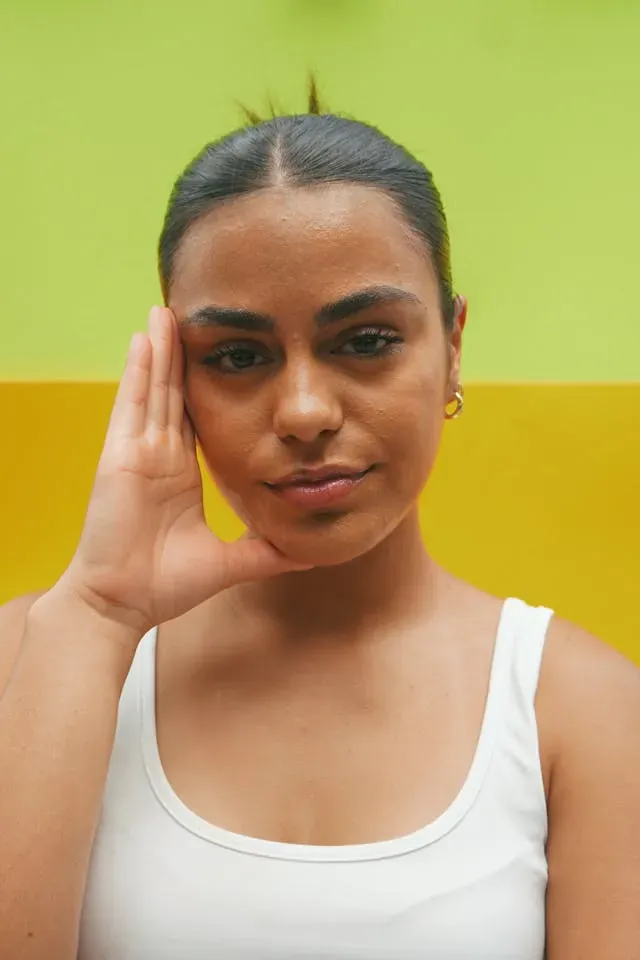
Then the whole batch goes through processing, and every file comes back with the same synthetic face, matched to your pose, expression, and lighting:
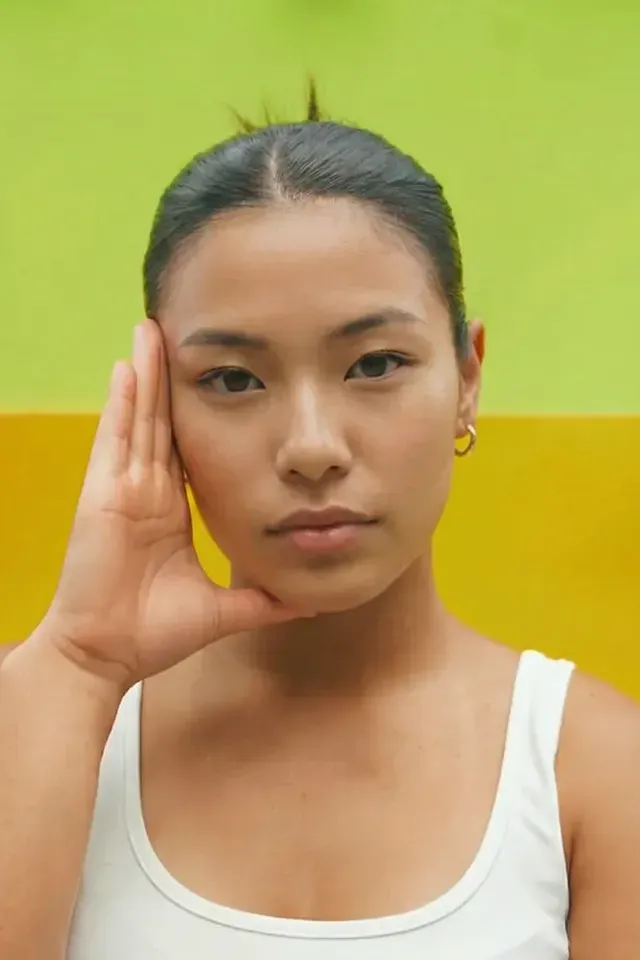
The habit that matters is batch discipline: everything gets processed, including archive content you made before you had the routine, because a single unprocessed frame in an old post undoes every processed one after it. Uploads being deleted after processing is part of the same logic; your originals shouldn't accumulate on someone else's server while you're busy minimizing every other copy of your real face.
Voice. Voice is biometric and people who know you can recognize it in seconds. Your options are speaking freely (accepting the risk), a voice changer, or staying silent in content. Pick one deliberately and keep it stable; a persona that speaks for six months and then goes silent invites exactly the kind of speculation you don't want.
Story. The persona sheet from the DM section is also your content bible. Captions, bio updates, and promo posts all draw from the same fictional facts. When you're tempted to reference something real because it would make a good caption, that's the seam asking to be widened.
Promotion upkeep without cross-contamination
Promotion is ongoing, so promo hygiene has to be ongoing too. The setup rules (dedicated email and number, no contact syncing, separate browser profiles) come from the anonymity checklist; what follows is the maintenance layer that keeps them true.
Re-check contact syncing quarterly. Social platforms re-prompt for contact access after app updates, and defaults shift; as of July 2026, Instagram, TikTok, and X all surface "people you may know" style suggestions that can bridge identities in both directions when syncing is on. Treat every "find your friends" prompt as an attack on the seam and decline it on creator accounts, forever.
Export platform-specific variants instead of crossposting identical files. Identical media is trivially matchable by reverse image search, which means one clip posted to both a personal and creator account (or reposted by a fan page) becomes a bridge. Different crops, different frames, different cover images per platform.
And keep growth tactics inside the persona. The strategies in our OnlyFans promotion guide all work for anonymous accounts, with one filter applied: any tactic that requires realness (face-to-camera trends built on your real face, local hashtags, "day in my life" content with real locations) either gets adapted into the persona's fictional world or skipped.
The decay vectors, in one table
| Leak vector | How it develops over time | Countermeasure routine | Cadence |
|---|---|---|---|
| Content archive | Every post is searchable forever; old unprocessed files resurface | Full publishing pipeline on every file, including archive cleanup | Every post |
| DM transcripts | Small real details accumulate into a locatable profile | Persona sheet + hard no-answer categories | Every message |
| Customs and samples | Media sent outside the normal pipeline skips processing | Route all outbound media through the same pipeline | Every send |
| Promo accounts | Contact sync re-enables, defaults change, suggestions bridge identities | Settings re-check on all platforms | Quarterly |
| Reposts and leaks | Content spreads to sites you don't control | Reverse image search of top content | Monthly |
| Platform changes | Discovery features and privacy defaults shift under you | Review OnlyFans and promo platform settings | Quarterly |
| Growing audience | More subscribers means more curious and motivated searchers | Funnel audit from a stranger's logged-out view | Monthly |
The table is the whole philosophy in miniature: nothing on the left column is exotic, and nothing on the right column is hard. What defeats creators is that the left column runs automatically and the right column doesn't. Cadence is the fix.
The monthly anonymity audit
Once a month, put an hour on the calendar and run this. The point is to find your own leaks before someone else does.
- Reverse image search your five most-shared pieces of content on Google Lens and TinEye. You're looking for reposts on sites you don't know about, and for any result that sits near your real identity.
- Walk your funnel as a stranger. Logged-out browser, start from your most public promo account, and try to reach anything real: follow lists, tagged content, similar usernames, linked emails. Then reverse it: start from your personal accounts and try to reach the persona.
- Re-check platform settings on OnlyFans and every promo platform: discovery toggles, contact syncing, tagging permissions, and any new privacy features added since last month.
- Review your alerts. Confirm your search alerts on your stage name, real name, and the combination still work, and read what they caught.
- Scan your last month of content for pattern leaks: same mug, same window light, same background hum that could stitch shots together with a personal-account post.
- Fix one thing. Every audit surfaces at least one soft spot. Patch it the same day, while it's open in front of you.
Log the results somewhere private, even as three lines of notes. Over a year, the log tells you which vectors keep reappearing, and that's where to tighten your weekly routine.
Milestones that change your risk profile
A quiet account and a growing account face different threat levels, and certain milestones should trigger a deliberate re-check rather than waiting for the monthly cycle.
Your first viral promo clip. Reach jumps by orders of magnitude overnight, and with it the chance that someone from your real life sees the content. Before you chase virality, make sure the pipeline has zero exceptions, because the clip that travels is the one you can't recall.
Crossing from hobby to income. When the account starts paying real money, more people in your life notice something changed. Payout banking that nobody else reads, and a decision about who (if anyone) gets told, matter more now. Every person told is a permanent vector, and most exposures that don't come from content come from people.
Your first collab. Another creator on your set, in your content, with their own operational habits. Collab only with creators whose privacy discipline you've discussed explicitly, agree on processing and posting rules before shooting, and remember their leak becomes your leak if your content appears on their accounts.
Getting reposted or written about. Fan pages, aggregator sites, and "top creator" lists copy your content and bio into places you don't control. You can't prevent it; you can make sure the persona they're copying contains nothing real, which is a test you passed or failed months earlier.
When something slips
Even good operations have incidents: a fan gets weirdly specific, a clip shows up somewhere unexpected, someone from your real life follows the promo account. Have the playbook written before it happens.
- Assess before acting. What exactly do they know, and what's the evidence they know it? A creepy guess ("you seem like a Midwest girl") is different from a fact ("I know you work at X").
- Don't confirm, don't deny, don't panic-delete. Confirmation upgrades a guess into knowledge. Mass-deleting content mid-incident signals the guess landed, and screenshots already exist anyway.
- Close the bridge. Figure out which seam produced the lead (a reused photo, a DM detail, a follower-list overlap) and fix that, because otherwise the next person finds the same path.
- Block and restrict broadly. The person involved, their alt-looking accounts, and, if it's someone from real life, quiet restrictions on your personal accounts too.
- Use the reporting machinery. Platforms take doxxing and harassment reports more seriously than they used to; file them with specifics on every site involved, and use DMCA takedowns for reposted content.
- Escalate if it turns into threats. Preserve evidence with screenshots and URLs, and treat threats of exposure or extortion as police and lawyer territory, not DM negotiation.
Most incidents end at step 3: a curious fan hits a wall of fictional details and consistent deflection, gets bored, and moves on. The creators who spiral are the ones improvising their response in real time.
Where that leaves you
Staying anonymous on OnlyFans is a maintenance discipline, and maintenance is a solvable problem: a publishing pipeline you run on every file, a persona sheet you never break, quarterly settings checks, a monthly hour of auditing, and a written plan for the bad day. None of it requires paranoia once it's routine, and routine is the goal, because your account will keep adding surface area for as long as it exists.
If you're building the foundation, start with the setup guide and the 25-step checklist. If you're already live, run this month's audit today, put the next one on the calendar, and let the habits do the protecting from there.
Frequently asked questions
- How do you stay anonymous on OnlyFans?
- Run every piece of content through the same pipeline before it posts: strip metadata, handle your face, check backgrounds, rename files. Keep creator accounts on separate emails, numbers, and browser profiles. Answer DMs in persona with no real details, ever. Then audit yourself monthly: reverse image search your content and try to walk from your promo accounts to your real identity. Anonymity holds when these are habits rather than one-time decisions.
- Does staying anonymous on OnlyFans get harder over time?
- Yes. Every post, DM, and promo clip adds surface area someone could search, screenshot, or cross-reference, and growth multiplies the number of people looking. Early on, nobody cares enough to dig; after a viral clip or a few hundred subscribers, someone eventually will. That is why anonymity needs routines with a fixed cadence instead of willpower: the workload scales with your account whether you plan for it or not.
- Can subscribers figure out who I am from my DMs?
- They can if you let details accumulate. No single message exposes you; the risk is the slow drip across months of chat: a time zone here, a job hint there, weather comments, a schedule pattern. Long-term subscribers feel like friends, and that feeling is exactly when creators overshare. Keep a written persona sheet with a fixed fictional city, job, and backstory, and never answer questions outside it.
- Do I need to use the same fake face everywhere?
- Yes. If you replace your face with an AI-generated one, use the same synthetic identity on OnlyFans, promo clips, and profile images. A persona whose face changes between platforms reads as an effect instead of a person, invites questions, and breaks the brand recognition that makes fans subscribe from your promo content. Good anonymization tools let you lock one synthetic face and reuse it across every batch you process.
- What should a monthly anonymity audit include?
- Four checks, about an hour total: reverse image search your most-shared content on Google Lens and TinEye; open your promo profiles from a logged-out browser and see how far a stranger can get toward your real identity; review your platform privacy and discovery settings for changed defaults; and check the search alerts on your stage name and real name. Log what you find and fix one weakness each cycle.
- What should I do if someone connects my OnlyFans to my real identity?
- Do not confirm or deny anything publicly, and do not panic-delete, since screenshots outlive removals. Document what they know and where they posted it, lock down the bridge they used, block and restrict on every platform, and file takedown or harassment reports with the sites involved. If threats appear, preserve evidence and consider police or legal help. Recovery goes far better when you wrote the plan before you needed it.
Create with
a face you choose.
Join thousands of creators building faceless brands with Neoface. Private by default, lifelike by design.
No credit card required · Instant access · Free plan available
- High-fidelity models
- Private and secure
- 24/7 support